Everyday family meals often revolve around a handful of repetitive dishes. The usual response is to look for new ideas, but the real problem lies earlier: most recipes are designed for a single meal, without considering what will happen to the leftovers the next day.
This approach leads to food waste at home, an issue that online recipe collections rarely address from the perspective of how the dish itself is designed. Yet preventing waste starts with planning portions and building a second use into the recipe from the outset.
Family dinners designed for two meals: the double-duty dish principle
Cooking a delicious family meal with a second life for the leftovers planned from the start changes the way you shop. Instead of figuring out what to do with surplus food afterward, the recipe builds reuse into the shopping list.
The principle is based on three simple rules: every ingredient you buy is used in both meals, quantities are calculated to produce a useful surplus, and transforming the leftovers takes no more than twenty minutes.
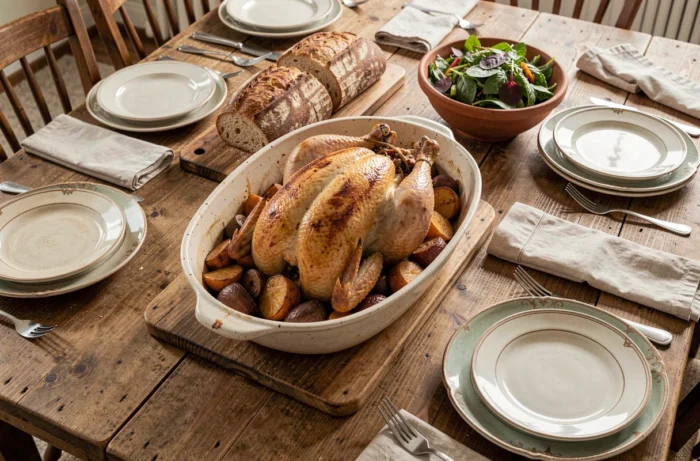
Here’s a practical example. A Sunday roast chicken with root vegetables (carrots, parsnips, potatoes) feeds the family that evening. The next day, the remaining meat can be shredded and used in wraps or a quick béchamel-topped casserole, while the roasted vegetables can be blended with stock to make a creamy soup.
No extra ingredients need to be bought, except perhaps tortillas or a little cream. At yummyblog.fr, this meal-to-meal approach underpins several weekly menu suggestions.
It’s worth clearly distinguishing between edible leftovers and unavoidable waste. Chicken bones, tough peelings, and damaged parts of vegetables are not food waste: they are inedible food scraps. Only the meat, sauce, and cooked vegetables count as reusable leftovers. Confusing the two distorts estimates of how much waste an anti-waste recipe can actually prevent.

Family recipes featuring legumes and seasonal vegetables
Food prices have risen sharply in France in recent years, with increases varying by product category. Promising a cost per person without specifying the date or calculation method is not very meaningful. However, focusing recipes on legumes, seasonal vegetables, and pantry staples remains a reliable way to keep costs under control.
Red lentil curry and rice: a family meal with fewer than five basic ingredients
Red lentils cook in fifteen minutes without any need to soak them first. Combined with coconut milk, a can of chopped tomatoes, curry powder, and rice, they make a complete meal that most children enjoy thanks to its smooth texture and slightly sweet flavor.
Leftover curry can be reheated as is the next day or turned into patties: mix it with an egg and a little breadcrumbs, then pan-fry the mixture into balls in five minutes. No ingredient is used just once.
Winter vegetable and sausage casserole: one bake, two meals
Butternut squash, leeks, and potatoes, cut into evenly sized pieces and arranged in a large baking dish with sausages, cook together in the oven for forty minutes. Making enough for six portions instead of four leaves leftovers that can be reheated with a splash of cream and grated cheese to make a quick second casserole the following day.
This one-pan cooking method saves energy and time. Prepare the dish in the morning before heading out, put it in the oven in the evening, and the kitchen stays clean.
Adjusting quantities to suit the people at your table: the planning most recipes leave out
Most online recipes say “serves 4” without clarifying whether those portions are suitable for two adults and two eight-year-old children or for four athletic adults. The difference between these two situations can amount to a third of the total quantity.
- For a household with two adults and two children under ten, reduce the portions of starchy foods by about a quarter compared with a recipe designed for four adults, while keeping the amount of vegetables the same.
- To make useful leftovers, add one and a half portions of the base ingredient (rice, pasta, legumes) rather than doubling the entire recipe, which creates excess vegetables that are difficult to reuse.
- Sauces and stocks freeze better than cooked starchy foods: making extra sauce rather than extra pasta helps avoid a mushy texture when reheated.
Planning useful surplus instead of ending up with unusable leftovers turns the chore of figuring out “what to do with the leftovers” into a decision made in advance.
Quick recipes for turning leftovers into a delicious dinner
The main obstacle to reusing leftovers isn’t a lack of ideas; it’s the perceived time needed to transform them. If the second recipe takes as much effort as the first, no one will stick with it.
Three ways to transform leftovers consistently take less than twenty minutes:
- Warm composed salad: leftover rice or quinoa, chopped roasted vegetables, shredded protein (chicken, fish), and mustard vinaigrette. No additional cooking required.
- Filled omelet: leftover sautéed vegetables, potatoes, or ground meat can go straight into beaten eggs. A complete family meal in ten minutes.
- Quesadillas or wraps: a tortilla, grated cheese, and any leftover meat or grilled vegetables. Pan-frying takes three minutes per side.
These three formats have one thing in common: they don’t require any special ingredients beyond what you’ll already find in a standard pantry or refrigerator (eggs, oil, mustard, cheese, tortillas).
Everyday family cooking works better when planned over two days rather than one meal at a time. Choosing an evening dish determines what’s on the menu the next day, and this forward planning reduces time spent in the kitchen, unnecessary shopping, and the amount of food thrown away. A good family dinner is also one that sets up the next meal.