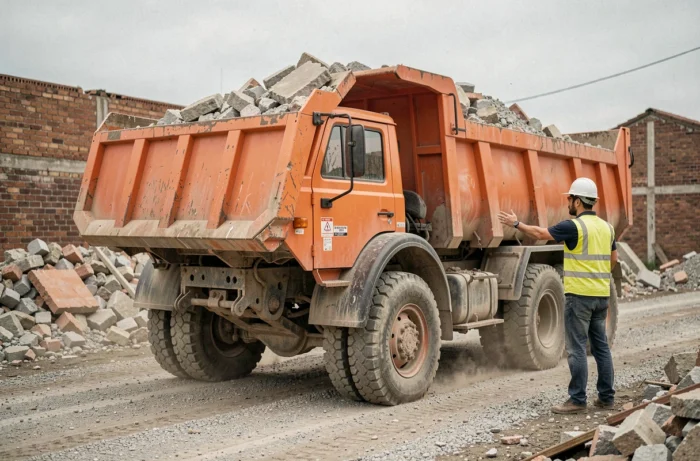
The capacity of a dump truck refers to the interior volume of its bed, expressed in cubic metres (m³). It is calculated by multiplying the usable interior length, width and height. Knowing this figure helps you plan the transport of bulk materials, but it is not enough on its own to organise a worksite: material density and the vehicle’s payload capacity matter just as much, if not more, when making the final choice.
Calculating dump truck capacity: geometric volume and actual volume
The basic formula is simple: interior length x width x height. A bed measuring 3 m long, 2 m wide and 1 m high has a geometric volume of 6 m³. Side extensions, when fitted, increase the height and therefore the available capacity.
The actual volume loaded almost always differs from the geometric volume. Angular materials such as rubble or crushed concrete leave gaps between pieces, so the fill rate is around 80%. By contrast, damp sand or topsoil fills almost the entire bed. To reliably estimate dump truck capacity in m³, you therefore need to apply a bulking factor suited to the material being transported.
Bulking refers to the increase in a material’s volume once it has been excavated or disturbed. Soil in the ground takes up less space than the same soil after it has been dug and loaded into a truck bed. Ignoring this effect can lead you to underestimate the number of truckloads needed for an earthworks project.
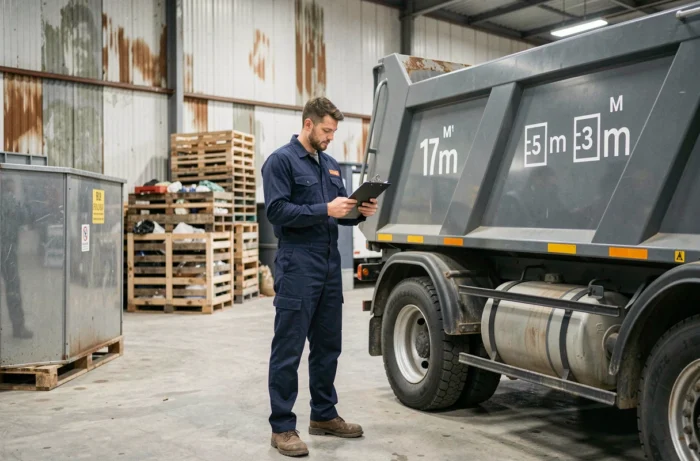
Material density and payload capacity: the real limiting factors for a dump truck
A truck bed cannot always be filled to the top. The permitted payload sets a weight limit that is reached well before the bed is full when carrying heavy materials.
Consider a practical example. A 6 m³ bed mounted on a truck with a payload limited to a few tonnes cannot hold 6 m³ of damp soil, which has a density of around 1.5 to 2 tonnes per cubic metre.
The maximum weight will be reached after loading around 3 to 4 m³. Filling the bed to the brim in this case would exceed the vehicle’s gross vehicle weight rating (GVWR), creating road safety risks and potentially leading to regulatory penalties.
By contrast, green waste or demolition timber is much lighter, so the full volume can be loaded without approaching the weight limit. The material determines whether volume or weight is the limiting factor, and this distinction can dramatically change the number of trips required.
Common materials and how they behave in a truck bed
- Topsoil and clay: high density, so the payload limit is reached before the bed is full. Plan for smaller loads.
- Rubble and crushed concrete: high density, with a lower fill rate because of the gaps between pieces. Weight limits the load before volume does.
- Dry or damp sand: density varies with moisture content, and damp sand is significantly heavier. Check the weight after loading.
- Green waste, timber and insulation: low density, so volume is the limiting factor. The bed fills before the payload limit is reached.
Number of trips: calculating loads based on volume and weight
Choosing a truck based on capacity alone means ignoring half the equation. The reliable approach is to calculate the number of trips by considering three factors: the total volume of material to transport, its approximate density and the truck’s payload capacity.
Step by step
Start by estimating the total volume to be moved, taking bulking into account. If an earthworks contractor excavates a given volume of soil in place, the expanded volume to be removed will be greater—often by 20 to 30%, depending on the type of soil.
Next, calculate the weight of a full load: the truck bed’s volume multiplied by the material’s density. If this exceeds the permitted payload, reduce the volume loaded per trip to stay within the legal limit.
Finally, divide the total expanded volume by the volume that can actually be loaded on each trip. The result gives the minimum number of trips. Allowing for one or two extra trips helps cover unexpected issues on site.
The number of trips determines the actual transport cost, not the truck bed’s capacity. Two trucks with different bed capacities may require the same number of trips if the smaller vehicle’s higher GVWR makes up for its reduced volume.
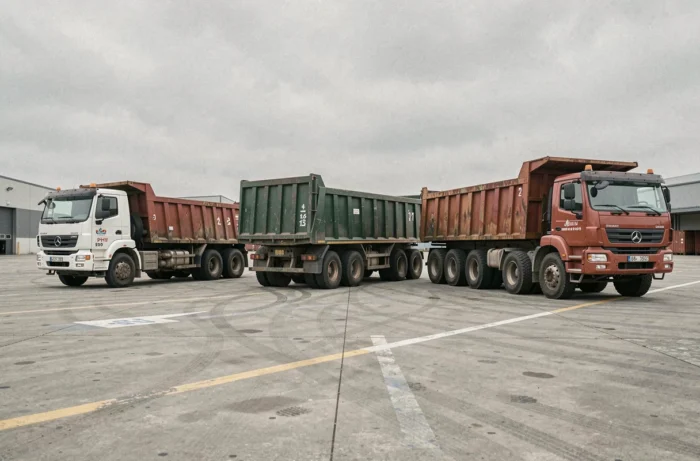
Choosing the right truck bed capacity for your project
The right capacity depends on the type of material, the distance to the disposal site and access constraints. A high-capacity truck bed reduces the number of trips for lightweight materials, but it requires a larger, wider truck that is harder to manoeuvre in urban areas or along narrow site roads.
For dense materials such as soil or rubble, a moderately sized truck bed on a vehicle with a high payload capacity will be more efficient than a large bed that can only be filled halfway. Any time saved per trip is lost if the truck has to run at half capacity because of the weight limit.
- Small urban project (renovation, landscaping): choose a compact, manoeuvrable truck suited to restricted access. The smaller capacity is offset by short trips to the waste disposal site.
- Construction or earthworks project: choose a medium- to high-capacity truck with a substantial payload. Use the weight-to-volume calculation to determine the right size.
- Removal of green waste or lightweight materials: choose the largest capacity available, as payload is unlikely to be the limiting factor.
The vehicle’s overall dimensions (width and length) should also be checked against site access and the roads along the route. The ideal capacity on paper is no use if the truck cannot fit through the gate.
Before renting or buying, identify the main material, estimate the total expanded volume and check the payload capacity of the vehicle you are considering. This three-part check helps you avoid paying for unnecessary trips or overloading the truck on the road.