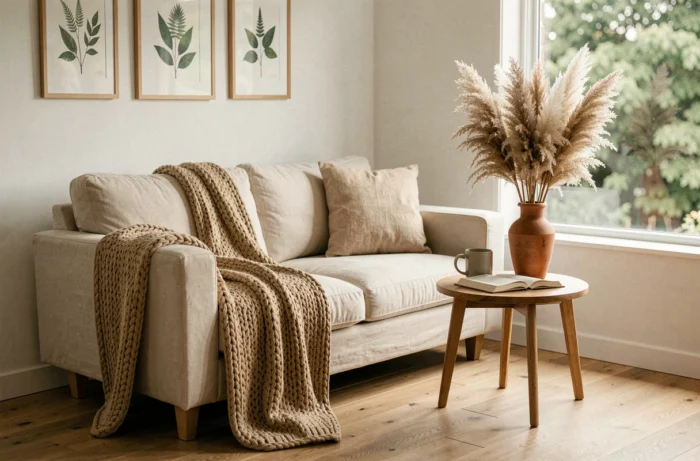
A room can be tastefully furnished and still feel cold. The problem rarely comes from the furniture itself, but from the balance between light, materials, and air circulation. Making a home beautiful and warm on a daily basis requires understanding how these three parameters interact, and then acting on each of them with simple gestures.
Summer thermal comfort and decoration: the trap that decor alone does not solve
Have you ever noticed that a perfectly decorated living room can become stifling as early as June? Insulation without ventilation or shading exacerbates overheating. A well-insulated house retains winter heat, but it also retains summer heat if nothing is planned to expel it.
Before choosing cushions or a new sofa, check that your windows have external solar protections (shutters, blinds, awnings). An interior curtain, even thick, allows most of the heat to pass through once the glazing has captured it.
The thermal inertia of materials also plays a direct role in the sensation. A stone or tiled floor stores the coolness of the night and releases it during the day. Solid wood flooring offers a compromise between visual warmth and thermal regulation. In contrast, a laminate laid on thin insulation stores nothing at all.
When you want to explore the home section of Mon Blog Beauté, you will find ideas that intersect aesthetics and real comfort, beyond mere visual trends.
Natural materials and indoor air quality in a living room
Accumulating textiles, scented candles, and decorative paints without considering ventilation amounts to decorating a space that gradually becomes unhealthy. Indoor air quality deteriorates with each unventilated emission source.
Raw wood, linen, untreated cotton, or wool emit very few volatile organic compounds. In contrast, some particle boards, carpet adhesives, or synthetic fabrics release formaldehyde for months after installation.
Choosing materials that warm without polluting
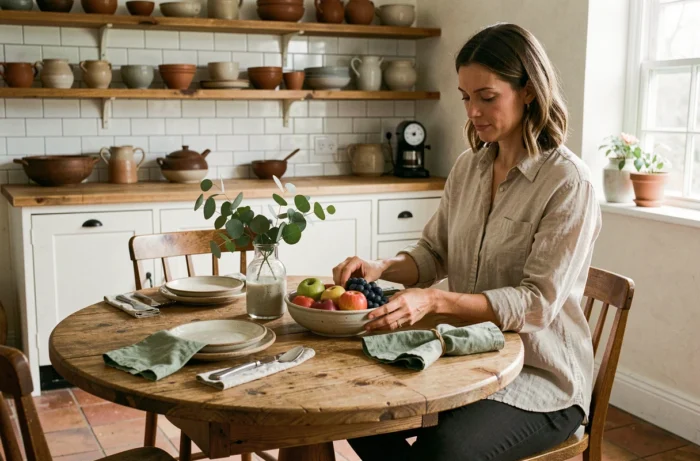
Favor materials with visible and identifiable finishes. A washed linen cushion, a virgin wool throw, a woven rattan basket add texture and visual warmth. Their additional advantage: they do not degrade the air you breathe.
- Solid wood (oak, beech, walnut) can remain raw or receive a natural oil. It brings a warm presence to the living room and ages without emitting pollutants.
- Organic linen and cotton, used for sofa covers or curtains, regulate ambient humidity and are easy to wash.
- Terracotta or glazed stoneware (vases, plant pots, decorative objects) add tactile relief without any chemical emissions.
Ventilate each room for at least a few minutes a day, even in winter. No decoration compensates for polluted indoor air.
Light and colors: creating lighting that changes the atmosphere of a room
A single ceiling light diffuses flat light that flattens volumes. The feeling of warmth in an interior largely depends on how light sculpts the space.
Multiplying sources rather than power
Three low-intensity lamps placed at different heights (coffee table, console, shelf) create areas of soft shadow. It is the contrast between lit areas and shadowed areas that makes a living room inviting, not the number of lumens.
Warm temperature bulbs (around 2,700 kelvins) reproduce golden tones close to natural evening light. So-called “neutral white” bulbs are suitable for a work surface but cool down a living space.
Color palette for a warm interior
Earthy colors (ochre, terracotta, deep beige) work well because they absorb light instead of reflecting it harshly. A wall painted in pure white reflects all the light and can create a clinical effect. An off-white, greige, or sand color softens this effect without darkening the room.
You can introduce a bolder color on a single wall or through a large object (a chair, a rug). A single touch of strong color is enough to anchor the identity of a room.
Storage and well-being: why decluttering changes daily perception
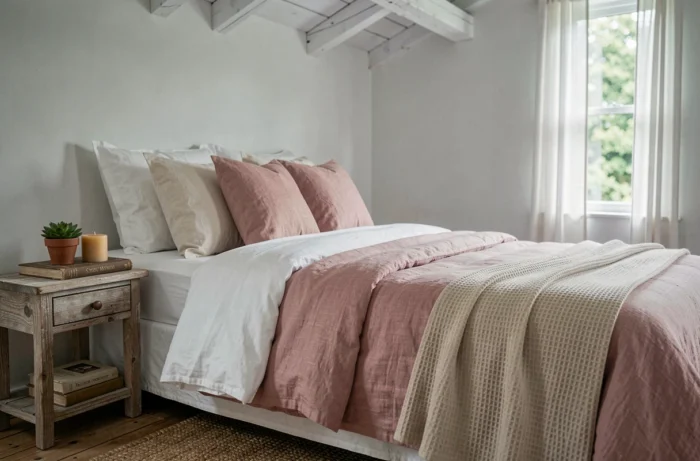
A visually saturated space tires the eyes. Storage is not just a practical matter: it conditions the perception of calm in each room.
The idea is not to hide everything, but to limit the number of visible objects at the same time. A shelf with five well-spaced objects looks neater than a shelf filled to the brim, even if the objects are beautiful individually.
- Group small objects in closed or semi-closed containers (baskets, boxes, trays). The eye then perceives a single volume instead of ten.
- Leave at least one-third of each horizontal surface (table, console, sideboard) empty. This free space creates visual breathing room.
- Do a seasonal sorting of decorative objects. Alternating accessories according to the season refreshes the ambiance without additional purchases.
An airy interior immediately gives an impression of care and comfort, even with modest furniture.
Making your home beautiful and warm relies less on the accumulation of trends and more on coherent choices between materials, light, and free space. A natural fabric sofa, three sources of warm light, and a clear wall transform the atmosphere more than an entire catalog of designer accessories.