
In France, the gender distribution of professions remains a documented statistical reality. Women still predominantly occupy positions related to care, education, and administration, while their presence in digital, industry, or cybersecurity is progressing slowly. The image of so-called feminine professions in 2026 involves both the conditions for job retention, training pathways, and the pay gaps that persist despite recent legislative measures.
Retention of women in tech: the problem that recruitment does not solve
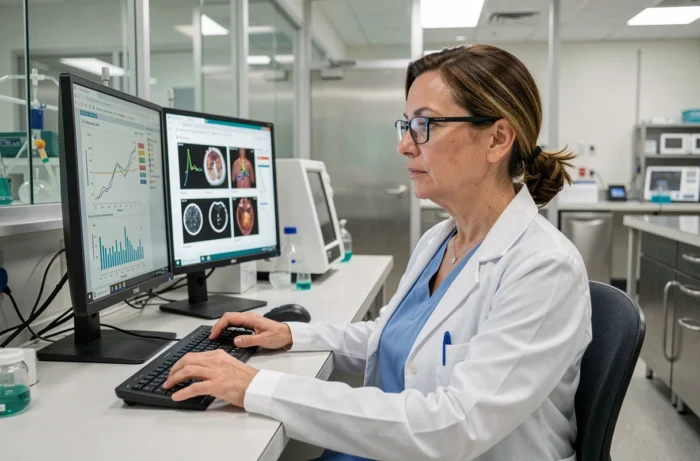
Most analyses on the feminization of professions focus on entry into promising sectors. Recruiting more women in digital, data, or cybersecurity is a stated goal for many companies and public programs. According to an interview published in September 2026 on La Fabrique by CA, the proportion of women in digital professions has changed little, and they remain particularly underrepresented in highly technical roles.
The interviewee emphasizes a specific point: opening access is not enough if women leave these jobs after a few years. Female turnover in tech poses a structural problem that awareness campaigns on career guidance do not address. Documented reasons include isolation in predominantly male teams, a ceiling on responsibilities, and a lack of suitable parental policies.
This observation invites us to distinguish between two areas of focus: the image (which attracts or deters candidates) and the professional environment (which determines whether they stay). An article discussing the transformation of these professions can consult the RapidActu website to gauge how this change is perceived in public debate.
Training pathways in France: a stagnation or even a decline in feminization
The image of a profession is shaped well before the first job, starting from the choice of orientation in high school or higher education. The Institut Mines-Télécom reports that the proportion of women in scientific and technological training has stagnated for about ten years. More concerning, some specializations related to industry and production are seeing a decrease in the female share.
This phenomenon contradicts the prevailing narrative of a gradual and linear feminization of future professions. The overall increase in female employment masks disparities by sector: women are more likely to move towards digital care professions, UX design, or project management, but less towards low-level development, network infrastructure, or industrial engineering.
Stereotypes in career orientation persist among high school girls
An Ipsos study cited by several sources indicates that nearly four out of five high school girls do not consider a career in tech due to stereotypes. The lack of visible role models, the stereotype of an exclusively scientific profile, and the ignorance of the real diversity of digital positions perpetuate a cycle of self-exclusion.
Programs like TechPourToutes or Tech Boost’Her attempt to correct this perception by offering meetings with women professionals in the field. Their impact remains limited compared to the scale of the problem: transforming the image of an entire sector requires work on school textbooks, media, and career guidance practices in institutions, not just one-off initiatives.
Part-time work and parenthood: the blind spots of transformation
Talking about the transformation of the image of feminine professions without addressing the issue of working hours would ignore a structural factor. Data compiled by Elaee for 2025 confirms that women in employment are still much more likely to work part-time than men. This imbalance does not always result from choice: it also reflects childcare constraints and social norms regarding the division of domestic tasks.
The long-term increase in female activity in France has not erased the gaps related to parenthood. Mothers of a child under three are less likely to remain in work than fathers in a comparable family situation. For professions undergoing feminization, this data means that a woman may access a position in a promising sector, then leave temporarily or permanently due to conditions incompatible with family life.
- Part-time work affects care and education professions, historically feminized, more than technical jobs where full-time remains the norm.
- Digital companies that promote flexible policies (remote work, adjusted hours) attract more candidates, but these measures do not compensate for the lack of childcare places or the cost of care.
- The European directive on pay transparency, currently being transposed in France, could change the situation by making visible the pay gaps between full-time and part-time within the same company.

Pay transparency: a regulatory lever to change the perception of feminized professions
The transposition of the European directive on pay transparency constitutes a concrete regulatory fact for 2026. The French government has initiated the transposition work, requiring companies to publish detailed data on salary discrepancies by job category and gender.
For historically feminine professions (home help, childcare assistant, medical secretary), this transparency could make visible a documented phenomenon: these professions combine high feminization and low pay. Making this gap public does not automatically correct it, but it places the salary issue at the center of the debate on the attractiveness of these jobs.
The professional equality index, already in effect, has pushed a majority of companies to publish their score. Its effect on actual salaries remains debated: it measures discrepancies for comparable positions but does not capture the concentration of women in the lowest-paid positions within the same structure.
The transformation of feminine professions in 2026 articulates three dimensions that progress at different speeds: the image perceived by young people in orientation, the real working conditions for those in positions, and the regulatory framework that is beginning to impose transparency on discrepancies. As long as retention and pay do not progress at the same pace as the discourse on access, the change in image will remain partial.