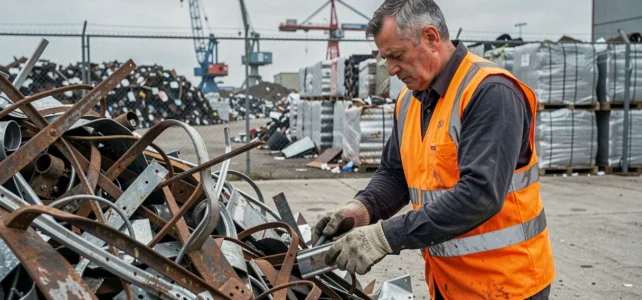
The price displayed on a Derichebourg grid almost never corresponds to the amount transferred to the seller’s account. Between the discount applied to approximate sorting, partial lot refusals, and rarely detailed handling fees, the gap between the reference price and the actual scrap price received from Derichebourg can reach several dozen euros per ton. Here, we break down the mechanisms that widen this gap in 2026.
Hidden Fees and Buyback Discounts at Derichebourg in 2026
The pricing grid of a Derichebourg center is indexed to international prices, primarily the Turkish Scrap Index for scrap and the LME for non-ferrous metals. This indexing creates the illusion of a transparent market price. In practice, the net price mainly depends on the specific buyback conditions of the site.
The first reduction factor: quality discount. A mixed scrap lot containing non-metallic elements (plastic, wood, rubber) incurs a deduction that can represent a significant portion of the theoretical price. Some centers apply a flat percentage downgrade as soon as the impurity rate exceeds a visual threshold, without separate weighing of the contaminants.
The second often overlooked factor: handling and logistics fees. For small volumes, the cost of weighing, additional sorting, and loading into containers is rarely displayed but is systematically deducted. For an individual delivering a few hundred kilos, these fees can sometimes negate the difference between a high price and a low price.
We also observe in 2026 outright purchase refusals on certain categories: closed equipment (compressors, non-degassed gas bottles), scrap contaminated with oils or chemicals. These refusals are not always listed on the public grid. The seller only discovers them at the time of weighing, with no recourse.
To objectively compare the current Derichebourg scrap prices and 2026 rates with those of an independent depot, one must consider net prices after deductions, not the displayed price per kilo.
Scrap Sorting Level and Impact on Derichebourg Pricing
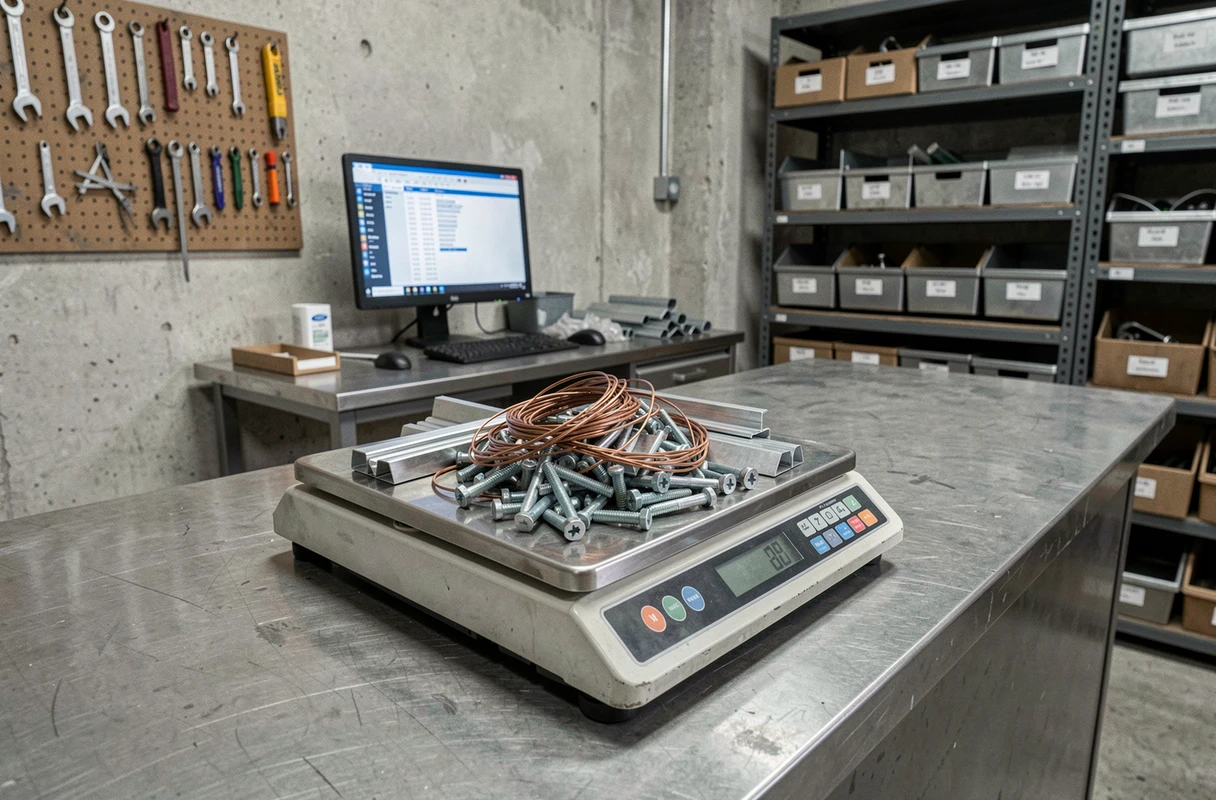
Sorting is the most underestimated lever by occasional sellers. A properly sorted lot can be worth double that of a mixed lot, all else being equal. The 2026 grids confirm this reality: clean heavy scrap (solid steel, cast iron) is still significantly better valued than light scrap (thin sheet metal, strip, cans).
At Derichebourg, as with other major recyclers, categorization follows a strict industrial logic. The main pricing distinctions focus on:
- Heavy scrap E40 (thicker than 6 mm, without contaminating elements), which receives the best price in the ferrous category.
- Mixed light scrap E3 (mixed, light, with tolerances on impurities), systematically discounted compared to E40.
- New machining or cutting offcuts, valued at an intermediate rate depending on their cleanliness and homogeneity.
The differential between these categories is not marginal. A craftsman who separates his thick steel offcuts from his thin sheets before delivery mechanically recovers a better weighted average price. Mixing the two in the same container aligns the entire lot with the least well-paid category.
Non-Ferrous: The Sorting That Changes Everything
The valuation gap between scrap and non-ferrous metals remains considerable in 2026. Bare copper trades at a price that is incomparable to that of steel, and even a non-stripped copper cable retains a value per kilo that is significantly higher. Separating copper and brass from scrap before delivery is the first profitable action.
Some Derichebourg centers accept insulated cables but apply a discount for the weight of the PVC sheath. Stripping cables before sale eliminates this deduction. The time spent stripping is recouped with just a few kilos of common sections.
Local Competition and Alternatives to the Derichebourg Network
Derichebourg has a dense national network, which facilitates access but does not guarantee the best net price. Independent scrap dealers and regional recycling cooperatives often operate under different conditions, sometimes more advantageous for certain families of metals.
Points of differentiation to check before choosing a buyer:
- Immediate cash payment, offered by some local depots, versus a transfer taking several days with large groups.
- The granularity of the pricing grid: a specialized scrap dealer sometimes distinguishes ten categories where a generalist center retains only three or four.
- The temporary suspension of buyback on certain metals, practiced by some sites when prices drop sharply, which can block a scheduled sale.
- The absence or presence of container and handling fees, rarely compared but crucial for small volumes.
We recommend always requesting a written quote detailing the price by category, any additional fees, and the conditions for refusals. This process, which takes a few minutes, allows for comparing truly comparable offers.
Steel and Scrap Prices in 2026: Market Trend for Derichebourg
The first half of the 2025-2026 fiscal year for Derichebourg reported a revenue of €1.829 billion, an increase of 7.9% compared to the same period in the previous fiscal year. This growth was driven by an increase in the volumes of scrap processed and the strong performance of copper and aluminum prices.
The demand for scrap has shown a tangible uptick, according to the group’s financial publications. This bullish context has led Derichebourg to raise its annual outlook, a positive signal for sellers who anticipate stabilization or a slight increase in buyback prices in the second half.
However, the price of steel remains volatile and sensitive to international trade policies. Tariffs, import quotas, and fluctuations in Turkish demand (the world’s largest importer of scrap) directly influence the price offered at French sorting centers.
A regular seller should keep track of price trends rather than relying on a grid consulted only once. The price of the same lot can vary significantly from week to week, even within the same Derichebourg site.