
The prevention of diseases relies less on general principles than on concrete devices and biological markers monitored at the right time. Since 2024, the My Prevention Assessment system has structured this approach in France around free appointments at key ages, but the majority of insured individuals have not yet exploited the technical levers available to them.
Neuder Law and cardio-neuro-vascular screening: what the regulatory framework changes
The Neuder law, recently enacted, mandates structured cardiovascular screening from a young age, with checks that can be performed at pharmacies. The stated goal is to prevent a large portion of heart attacks through early detection of risk factors.
This legislative text is not limited to doctors. Pharmacists, already on the front lines for prevention assessments since 2025, are becoming central actors in the screening process. We observe that pharmacists now conduct more than half of the prevention assessments according to data from the Ministry of Health as of June 30, 2026.
Starting in October 2026, physiotherapists will also be able to perform these assessments, alongside doctors, midwives, and nurses. This extension multiplies the entry points into the prevention system, reducing the time between the appearance of a risk factor and its management. To delve deeper into the pathological mechanisms associated with these factors, the health site You and Your Health details the links between biological markers and the progression of chronic diseases.
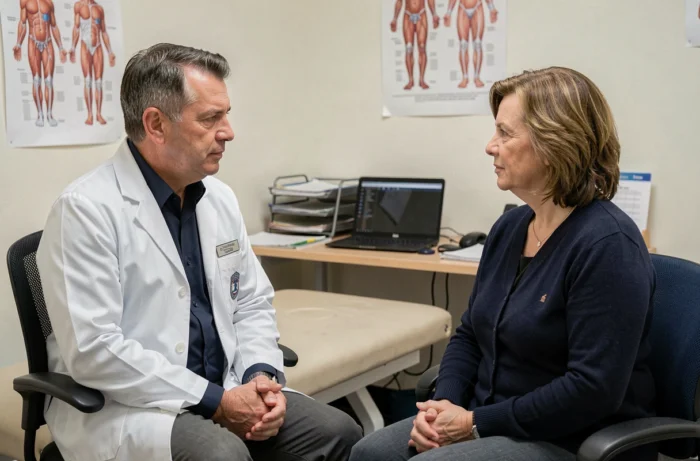
My Prevention Assessment: four key appointments and personalized plan
The My Prevention Assessment system targets four age groups: 18-25 years, 45-50 years, 60-65 years, and 70-75 years. Each appointment covers a specific spectrum: nutrition, physical activity, addictions, mental health, vaccination, and screenings tailored to the age group.
The technical interest lies in the personalization of the resulting plan. This is not a standard consultation: the healthcare professional establishes an individualized assessment that directs towards complementary examinations or targeted behavioral modifications.
What each assessment actually covers
- Evaluation of dietary habits with identification of specific deficiencies or excesses (intake of saturated fatty acids, salt consumption, frequency of processed meals)
- Measurement of actual physical activity level and comparison with recommended thresholds for the relevant age group
- Identification of addictive behaviors (tobacco, alcohol, excessive sedentary lifestyle) and referral to appropriate support
- Verification of the vaccination schedule and proposal for catch-up if necessary
- Assessment of mental health, with identification of signs of chronic stress or early anxiety disorders
We recommend preparing for these appointments in advance: gather your latest blood assessments, note your dietary habits over a typical week, and list family medical history. An prepared assessment produces a significantly more actionable prevention plan.
Social prescription and prevention of chronic diseases
Social prescription is gaining ground in France as a prevention lever. The principle: a healthcare professional directs the patient towards non-medical activities (adapted sports, cooking workshops, support groups, cultural activities) to address the social determinants of health.
This system particularly targets patients with chronic diseases or at risk of developing them. Social isolation accelerates the progression of many chronic pathologies, and social prescription specifically aims at this factor that medication treatments do not cover.
Feedback from patients shows a perceived improvement in pain and overall well-being when isolation decreases. This is not a substitute for medical treatment, but a complement that addresses the psychosocial component of the disease.

Nutrition and prevention: going beyond generic recommendations
Classic dietary advice (eating fruits and vegetables, reducing salt) remains valid but insufficient for targeted prevention. The technical question focuses on the quality of consumed fatty acids, the actual nutritional density of meals, and the regularity of intake.
Fatty acids and chronic inflammation
A prolonged imbalance between saturated and unsaturated fatty acids promotes low-grade chronic inflammation, a conducive environment for cardiovascular diseases and certain cancers. Prioritizing fatty fish, first-press vegetable oils, and nuts constitutes a more precise strategy than the simple advice to “eat balanced.”
Each meal should contain at least one source of unsaturated fatty acids. This is a simple criterion to apply that significantly modifies the inflammatory profile over several months.
Frequency of processed meals
The proportion of ultra-processed foods in daily nutrition is a more reliable risk marker than simple calorie counting. These products concentrate additives, added sugars, and hydrogenated fats that disrupt the gut microbiota and increase the risk of metabolic pathologies.
We recommend tracking the weekly frequency of consumption of these foods rather than focusing on an isolated nutrient. Reducing ultra-processed foods simultaneously addresses multiple risk factors.
Physical activity and mental health: the underestimated double benefit
Regular physical activity reduces the risk of chronic diseases, but its effect on mental health remains the least exploited lever in daily prevention. Moderate exercise practiced regularly affects cortisol regulation, improves sleep quality, and reduces anxiety symptoms.
The technical point to remember: regularity takes precedence over intensity. Short but daily sessions produce greater effects than an intense weekly session on stress and inflammation markers.
- Daily brisk walking of at least thirty minutes to maintain basic cardiovascular capacity
- Muscle-strengthening exercises twice a week to preserve muscle mass, a protective factor against falls and metabolic pathologies
- Flexibility or relaxation activities (yoga, stretching) for managing chronic stress and preventing musculoskeletal disorders
The extension of professionals authorized to conduct prevention assessments, the structuring of My Prevention Assessment, and the emergence of social prescription outline a system where disease prevention no longer relies solely on individual will. The tools exist, most are free, and the prevention pathway is now built with several coordinated healthcare professionals.