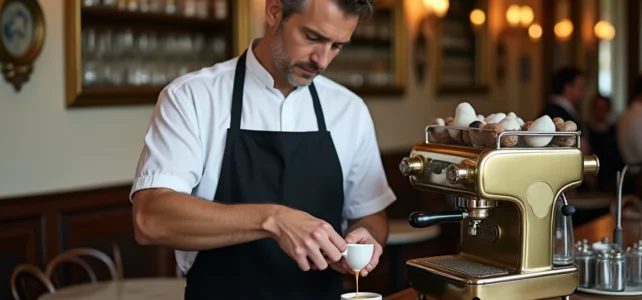
A bar or a café refers to an establishment where drinks are served, with or without light meals, in a space open to the public. This simple definition encompasses a diverse reality: from the neighborhood zinc bar to the specialty coffee shop, including the historic bistro or cocktail bar. Understanding this diversity requires looking back at the origins of these establishments and observing how recent changes are reshaping their place in the city.
Origins of the café and bar in France: a political function before being commercial
The first European cafés appeared in the 17th century, initially as places for discussion and debate. In France, Le Procope, often cited as the oldest café in Paris, hosted figures of the Enlightenment. The café was not just about a drink: it offered an accessible public space, distinct from the aristocratic salon and the popular tavern.
Modern bars developed later, around the zinc counter, which became a marker of the French urban landscape in the 19th century. The neighborhood bistro then concentrated several roles: informal post office, meeting room, daily meeting point. This versatility explains why the gradual disappearance of these places raises so much concern.
To learn everything about bars and cafés, it is important to remember that their history is not limited to gastronomy. These establishments structured urban sociability long before the advent of social networks or coworking spaces.
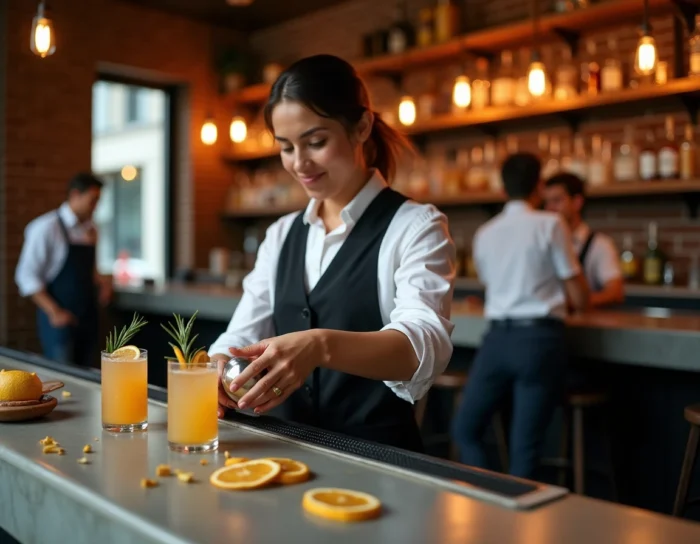
Specialty coffee and coffee shops: what the upgrade changes
The coffee shop market is experiencing notable growth in France. The phenomenon goes beyond the simple opening of new addresses: it changes the relationship to the product and the space.
A specialty coffee is distinguished by the traceability of the bean, the extraction method, and the training of the barista. The customer no longer orders “a coffee” but chooses an origin, an aromatic profile, sometimes a method (V60, AeroPress, cold brew). This approach transforms consumption into a codified sensory experience.
The direct consequence on the urban fabric deserves attention. A coffee shop typically sets up in an already attractive neighborhood, with a pricing position higher than the neighboring bar-tabac. The filter coffee at four or five euros creates a selection effect: the clientele changes, as do the visiting habits.
- The coffee shop attracts a mobile clientele, often working remotely, who occupies a table for several hours with a laptop.
- The traditional bistro operates on a quick flow at the counter, with a margin made on the volume of short consumptions.
- The two models rarely coexist in the same location, as their layout and profitability constraints diverge.
The neighborhood café loses its function as a neutral space when it specializes. A regular who used to grab their espresso at the counter no longer recognizes themselves in a space designed for slow coffee and latte art. The upgrade produces a form of soft exclusion, rarely intentional but real.
Branded cafés and branding strategy: hospitality as a marketing ground
A parallel phenomenon accentuates this transformation. Fashion and luxury brands are opening their own cafés in Paris and other major cities. Bacha Coffee has set up on the Champs-Élysées. Brands like Prada, Ami, or Kitsuné use the café as an extension of their brand universe.
The goal is not the profitability of the coffee sold. The branded café serves as an immersive showcase, a space where the customer enters without the intention of purchasing clothing but absorbs the brand’s identity. Harper’s Bazaar describes this phenomenon as a membership strategy, distinct from traditional advertising.
For the landscape of bars and cafés, this trend has two concrete effects. First, it raises aesthetic standards: designer furniture, branded tableware, careful scenography. Independent cafés face pressure on their image without having the same budgets. Second, it reinforces the idea that the café is a place for personal staging, which social networks amplify with so-called “Instagrammable” addresses.

Bistros and cafés in France: a threatened heritage seeking recognition
The number of bistros and cafés in France has significantly decreased since the 1960s. The association Bistrots et Cafés de France advocates for the recognition of these places as living cultural heritage. A candidacy for intangible heritage has been mentioned in the specialized press, a sign that the issue goes beyond simple commercial stakes.
Several factors explain this erosion:
- Anti-smoking regulations have reduced patronage at counters, especially in rural areas.
- The rise in rents in city centers pushes operators towards more profitable formats (fast food, concept stores).
- The aging of managers, often without successors, accelerates closures in small communities.
The question raised by this trend is less nostalgic than economic. A village without a café loses its last place of sociability open to all. Attempts to revive sometimes go through cooperative models or municipal aid, but they remain scattered.
Wine bars, cocktail bars: specialization as a new standard
Specialization is not limited to coffee. Natural wine bars, craft cocktail bars, and craft beer bars are multiplying in major French cities. Each format targets a specific segment, with a reduced menu, a carefully designed decor, and active communication on social networks.
This segmentation enriches the offer for the urban consumer. It poses a problem for the generalist bar, the one that served both a half-pint and a whiskey or fruit juice. This versatile model, long dominant, is receding in the face of more readable and photogenic concepts.
The risk, in the long term, is that of a city where each establishment addresses a niche, with none fulfilling the function of a common place. The neighborhood café, by definition, welcomed everyone without filters of price, dress code, or product culture. Its disappearance would leave a void that neither the specialty coffee shop nor the cocktail bar could fill.
The addresses that resist the best are often those that combine local anchoring and openness: a bistro that offers good coffee without making it a manifesto, a bar that schedules a concert on Thursday without becoming a performance venue. This ability to remain an ordinary place, in the noble sense of the term, may be their best asset for survival.