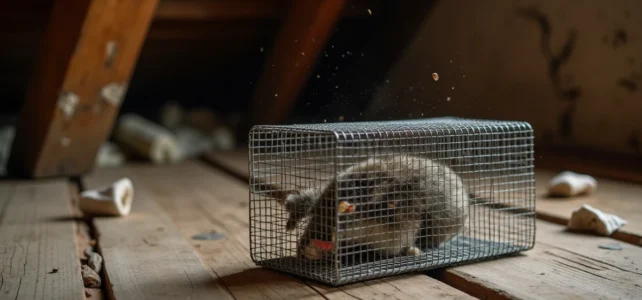
The choice of a weasel trap is not just about comparing cage sizes on the shelf. Even before looking at the available references, the regulatory question conditions everything: the status of the weasel varies according to departmental prefectural orders, and an individual purchasing a trap does not necessarily have the right to use it without a trapping permit. We recommend checking the list of species likely to cause damage (ESOD) in your department before any purchase.
Steel mesh and trap mechanism: what distinguishes a reliable weasel trap
A cage trap intended for weasels must withstand a powerful animal for its size, capable of biting and forcing a fine mesh. The determining parameter is the diameter of the galvanized steel wire: below a certain threshold, the weasel deforms the mesh in a few hours. We regularly observe low-quality cages whose mesh gives way after a single capture.
The triggering mechanism deserves as much attention as the structure. Central pallet traps offer more reliable triggering than tensioned wire systems, as the weasel naturally walks to the center of the cage to reach the bait. An anti-return locking system on the door is non-negotiable: without it, the animal lifts the trap and escapes.
When looking for a weasel trap at Brico Dépôt, focus on these two criteria rather than the displayed price. A cage that does not hold the animal forces you to restart the trapping process, with a now wary weasel that is much harder to capture.
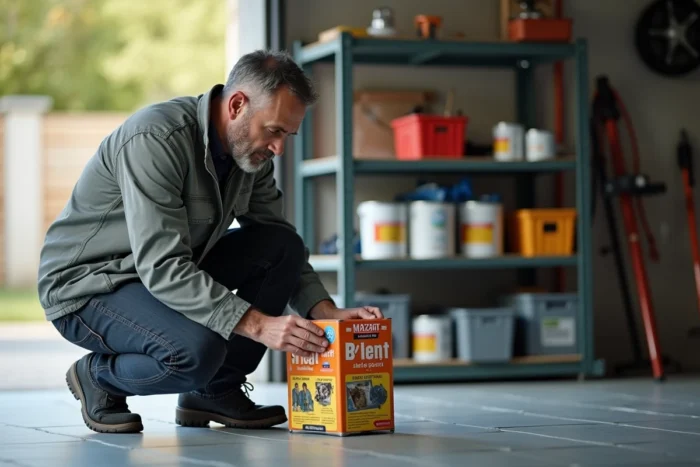
Positioning the weasel trap: passage area and installation height
The location of the trap matters more than the model chosen. A perfectly designed cage placed in the wrong spot will capture nothing.
The weasel follows regular routes. Identifying these passage areas before installing anything is the first step. Paw prints, characteristic droppings (twisted, often left at height), scratches on beams or gutters: these clues indicate the movement axes.
- In attics, place the cage along a rafter or beam, never in the center of an open space where the animal feels exposed
- Outside, prefer a narrow passage between a wall and an obstacle (dense hedge, shed), protecting the trap from the elements with a board placed on top
- In a garage or loft, orient the entrance of the cage towards the identified access point (hole in the under-roof, technical duct, ventilation shaft)
The weasel avoids unstable surfaces and well-lit areas. Stabilize the cage on the ground with a wedge or weight to prevent any tipping at the moment of triggering. A trap that moves when the animal contacts it causes an immediate escape.
Bait and trap check frequency
Field reports converge on a few baits whose effectiveness clearly surpasses others. The whole egg (raw, simply placed at the bottom of the cage) remains the most reliable. Fresh grapes and pieces of raw poultry also work, with an advantage for poultry in cold periods when the smell carries better.
Conversely, avoid baits based on cheese or bread, which primarily attract rodents and cats. A trap triggered by a rat is a trap lost for the night.
Daily check: a legal and practical obligation
Regulations require a check of the trap every morning. This constraint is not trivial: an animal kept locked up too long injures itself, which raises animal welfare issues and exposes the trapper to penalties. Practically, a captured weasel that struggles for hours damages the cage and makes the mechanism less reliable for subsequent uses.
We recommend noting the time of setting and checking in a notebook, especially if you are in a department where a trapping permit is required. In case of an inspection by the French Office for Biodiversity (OFB), these records constitute your proof of compliance.

Prevention before trapping: sealing access points to avoid recidivism
Capturing a weasel without addressing its entry point guarantees the return of another individual in the following weeks. Trapping alone never provides a lasting solution to a weasel problem.
The priority is to locate and seal every access point. The weasel can slip through openings of just a few centimeters. Critical points are the junctions between roofing and masonry, unsealed cable passages, and ventilation grilles with too wide a mesh.
- Fine mesh netting (aviary type) fixed over ventilation openings, with screws and washers to resist tearing
- Expanding foam reinforced with metal mesh over duct passages (foam alone is pierced in a few minutes)
- Motion-detecting lighting at external access points, which disrupts the animal’s nocturnal habits
- Reduction of accessible food sources: closed compost, animal bowls brought in at night, fallen fruit collected
These preventive measures, combined with occasional trapping if necessary, form the only approach that lasts over time. A sealed access point protects better than a trap set permanently.
One last point to keep in mind: if nuisances persist despite sealing and trapping, calling in a licensed trapper or a pest control professional remains the safest approach, both from a regulatory standpoint and for the effectiveness of the result.