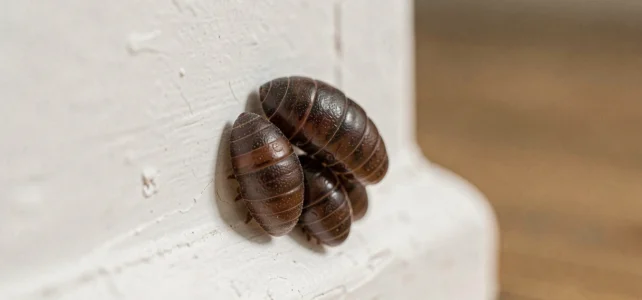
Small brown pupae, motionless, stuck to a kitchen wall or hanging in a corner of the ceiling: fly pupae often go unnoticed until their numbers draw attention. These rigid casings, the last stage before the emergence of the adult fly, pose no direct health hazard. Their presence in a home raises a more useful question than that of risk: where is the source of organic matter that fuels the reproductive cycle?
Fly pupae attached to walls: what their location reveals
Competitors extensively cover the definition of a pupa and the identification of species. One point remains under-exploited: the location of pupae on a wall or ceiling provides concrete clues about the proximity of the larval breeding site.
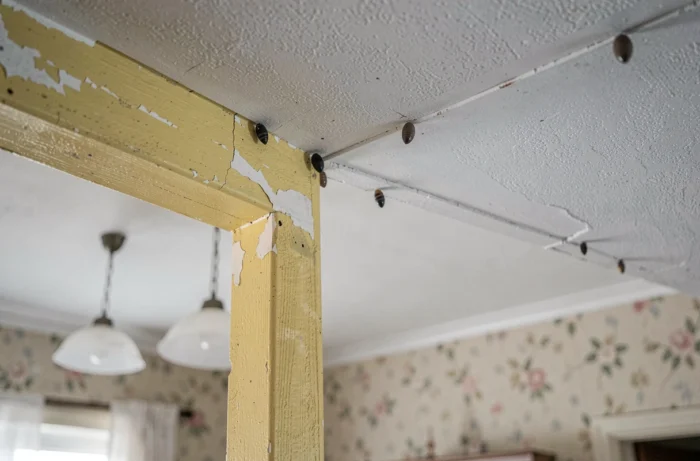
A housefly larva leaves its food source to find a dry and stable place to transform. It rarely crawls beyond a few meters. Pupae clustered in a corner of the ceiling, near a ventilation outlet, or along a baseboard, indicate a breeding site located within a short radius.
The pupa does not move once formed. If you spot several in the same place, the larval source is in immediate proximity, often in the same room or behind an adjacent partition. Detailed information on this phenomenon is available on www.insideoutsidemag.com, which distinguishes benign situations from cases requiring intervention.
Finding isolated pupae, scattered across several rooms, points rather to an adult fly having laid eggs in different places. The distribution pattern is the first diagnostic tool before any cleaning.
Micro-refuges in homes where larvae develop before migrating
Common guides cite the trash can and compost. Recent technical observations, including those published by Project Insect in August 2026, expand the list to rarely inspected areas:
- Gaps between baseboards and the floor, where food residues accumulate without being visible during regular cleaning.
- Underneath appliances (refrigerator, dishwasher), where moist organic matter can stagnate for weeks.
- Interior seals of trash cans and edges of carpets near the kitchen, which retain enough moisture to allow for complete larval development.
- Storage boxes left in a pantry or adjoining garage, especially if they have been in contact with food items.
As long as the source of moist organic matter persists, new pupae will appear, even after cleaning the walls. A common mistake is to remove visible pupae without inspecting these micro-refuges.
Emergence dynamics after cleaning: why flies continue to appear
A phenomenon regularly confuses occupants of a home: after identifying and removing the source, adult flies continue to emerge for several days. This delay is not a sign of failure.
Adults can emerge from already formed pupae at the time of cleaning. The pupal stage lasts from a few days to over a week depending on the ambient temperature. Pupae hidden in cracks, behind furniture, or under an appliance continue their development even if the larval source has disappeared.
The pressure gradually decreases, provided that the source is truly eliminated. If new pupae appear after two weeks, it means a secondary breeding site exists elsewhere. This delayed emergence dynamic is rarely described in mainstream content, leading to unnecessary insecticide treatments on flies that would have stopped appearing naturally.
Fly pupae and housing hygiene: distinguishing signal from verdict
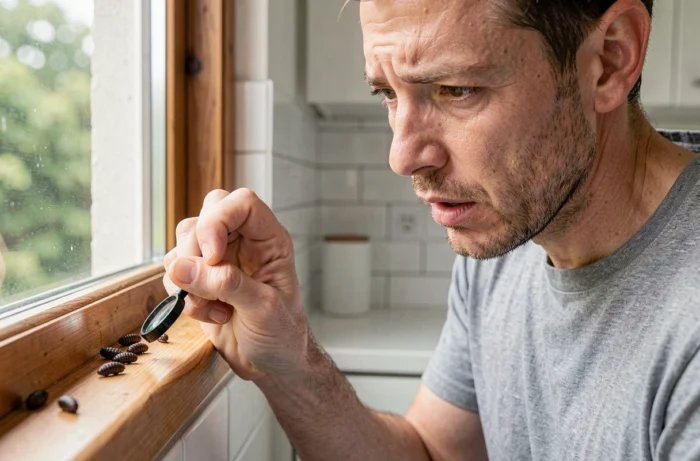
The presence of fly pupae is not a reliable indicator of the overall hygiene level of a home. A female fly can lay several hundred eggs in a single batch. It only takes one insect to enter through an open window and find a bit of moist organic matter to trigger a complete cycle.
A forgotten fruit in a bag or a poorly maintained siphon is enough to produce dozens of pupae. New homes, well-kept kitchens, and apartments located on higher floors are not spared as long as a sporadic source exists.
What deserves attention, however, is recurrence. Pupae that regularly reappear in the same spot, season after season, signal a structural problem: cracked plumbing, poorly ventilated crawl spaces, or unsealed access from the outside. In this case, the diagnosis goes beyond simple cleaning and requires an inspection of the building.
When to consult a pest control professional
Most situations can be resolved by eliminating the source and waiting for residual pupae to hatch. Professional assistance is warranted in three specific cases: a massive infestation with hundreds of pupae across several rooms, an untraceable source despite a methodical inspection, or suspicion of an animal carcass in an inaccessible area (attic, false ceiling, duct).
A specialized technician has inspection tools (endoscope, decomposition gas detector) that can locate a hidden breeding site without costly exploratory work.
A few pupae on a wall remain a common and seasonal phenomenon. Their mechanical removal (scraping, vacuuming) combined with the elimination of the organic source resolves the vast majority of cases in less than two weeks. The only real warning signal is repetition in the same spot, which points to a cause that cleaning alone cannot resolve.